In today's increasingly competitive market, product reliability and durability have become decisive factors for success. Whether for precision electronics, automotive components, or aerospace parts, any product must undergo rigorous environmental testing before market launch. Among these tests, the ability to simulate extreme temperature conditions is crucial, which is the irreplaceable core value of high and low temperature test chambers.
1. Simulating Real-World Environments to Foresee Potential Risks
Products in real-world use often face temperature challenges far beyond standard lab conditions. Extreme cold in northern climates can embrittle materials or solidify lubricants, causing component failure. Intense heat in southern regions or internal device heating can trigger overheating protection, performance degradation, or even safety hazards. Flaws difficult to detect under normal conditions become readily apparent in the extreme environments created by test chambers. By precisely simulating cyclic changes from temperatures as low as tens of degrees below zero Celsius to over a hundred degrees above zero, these chambers accelerate the product aging process. This helps uncover potential issues like mismatched material expansion coefficients, cracked solder joints on components, seal failures, or software errors. Essentially, they compress years of potential thermal stress into days or weeks, helping companies avoid significant market risks and after-sales costs.
2. Ensuring Quality Consistency and Strengthening Brand Reputation
For mass-producing companies, having a single prototype perform well is insufficient; consistent quality across mass-produced goods is fundamental for staying competitive. Minor variations in raw material batches or slight fluctuations in manufacturing processes can be magnified under extreme temperatures, leading to vastly different reliability outcomes for entire production batches. High and low temperature test chambers provide a highly controlled, repeatable testing environment, ensuring every batch and every product undergoes identical rigorous assessment. This standardized testing process is the cornerstone of establishing a robust quality control system and delivering on quality promises. When products demonstrate stable operation across various extreme climates, the resulting reputation and user trust become invaluable assets for the brand.
3. Driving Technological Innovation and Enhancing Competitive Edge
High and low temperature test chambers are not just quality control tools; they are powerful engines for research and development. During stages like new material development, new process exploration, or new product design finalization, engineers need accurate data on product performance limits across different temperatures. For instance, developing equipment for polar expeditions or servers meant for continuous operation in high-heat environments requires using test chambers to validate design feasibility and identify optimal improvements. By analyzing product behavior during temperature cycling, R&D teams can precisely refine material selection, structural design, and thermal management solutions. This leads to creating more robust, durable, and globally adaptable innovative products, directly driving technological breakthroughs and building competitive advantages that are hard for rivals to overcome.
4. Meeting Standards and Certifications for Market Access
Major global industry organizations and standards bodies, such as ISO, UL, and IEC, have explicit testing standards and certification requirements for product environmental adaptability. High and low temperature testing is an indispensable, often mandatory, part of these requirements. Lacking the appropriate testing capabilities can prevent products from obtaining the necessary "passport" to enter many mainstream markets, especially high-end ones. Equipping facilities with accurate and reliable test chambers and establishing internal testing labs that comply with standards not only significantly shortens certification cycles and speeds up time-to-market but also demonstrates to clients and partners a company's serious commitment to quality and professional capability. This becomes a crucial asset for winning major project bids and gaining the trust of demanding customers.
Choosing the Right Partner to Enable Superior Product Performance
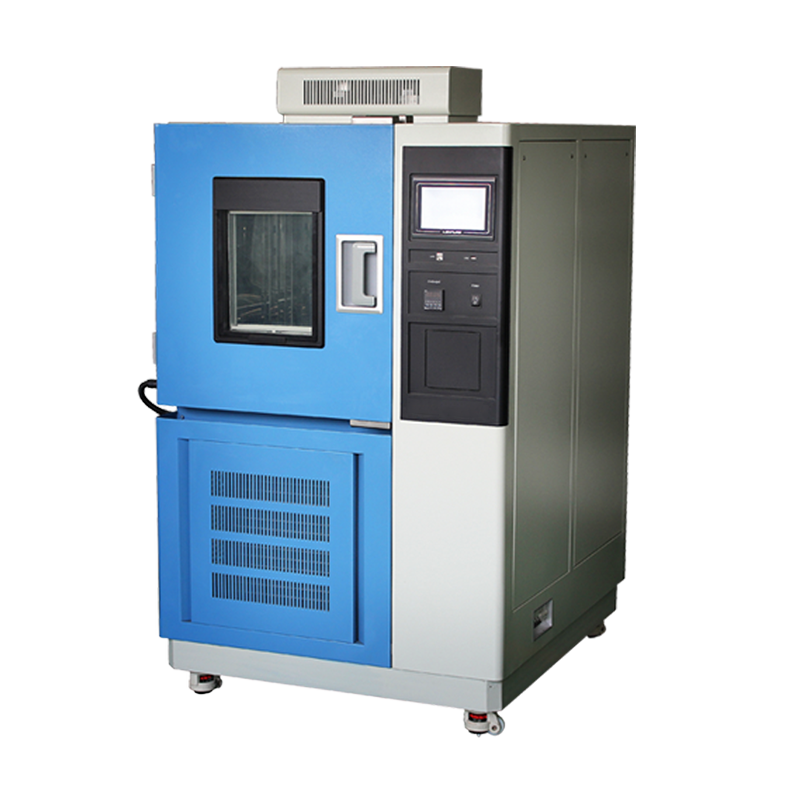
Therefore, a high and low temperature test chamber is far more than a simple "refrigerator" or "oven." It is an essential strategic asset in modern industrial quality control and R&D systems. By scientifically simulating extreme environments, it provides companies with the core capabilities to foresee risks, ensure quality, drive innovation, and meet certifications. Investing in reliable high and low temperature testing solutions is an investment in the future of your products and the long-term vitality of your brand.