In the evaluation system for material and coating protective performance, salt spray testing is the gold standard for verifying a product's corrosion resistance. As the core testing equipment, the different types of tests performed by salt spray chambers directly determine the relevance and authority of the results. Understanding the distinctions between Neutral Salt Spray (NSS), Acetic Acid Salt Spray (AASS), and Copper-Accelerated Acetic Acid Salt Spray (CASS) tests is crucial for businesses to accurately assess product quality and enhance their core competitiveness.
1. Neutral Salt Spray (NSS): The Foundation of Basic & Universal Testing
Neutral Salt Spray is the longest-established and most widely used corrosion test method. Its test solution is a 5% sodium chloride solution, with the pH adjusted to a neutral range (6.5-7.2). It simulates corrosive environments commonly found in nature, such as marine or salty, humid atmospheres.
-
- Key Characteristics: Mild test conditions, good reproducibility, simple operation.
- Primary Applications: Ideal for basic quality control and comparative assessment of the corrosion resistance of metallic materials and their inorganic coatings (e.g., anodizing, phosphating, zinc electroplating, cadmium electroplating). It serves as the foundation for many industry standards (e.g., ASTM B117, ISO 9227).
- Value Proposition: Provides businesses with a universal, reliable benchmark test, making it the preferred choice for incoming/final inspection and material screening.
2. Acetic Acid Salt Spray (AASS): A Step Up in Acceleration & Severity
To shorten test cycles and evaluate material corrosion resistance faster, the Acetic Acid Salt Spray test was developed. Building on the NSS test, it involves adding glacial acetic acid to lower the test solution's pH into the acidic range (3.1-3.3). This acidic environment significantly accelerates the corrosion process.
- Key Characteristics: Noticeably faster corrosion rate than NSS, offering greater acceleration and severity.
- Primary Applications: Primarily used for testing certain decorative coatings, such as copper-nickel-chromium or nickel-chromium plating, and anodic oxide coatings on aluminum alloys. It quickly reveals pores and defects in the coating.
- Value Proposition: Helps businesses significantly improve testing efficiency, obtaining durability data in a much shorter time. Particularly useful during R&D for rapid verification and optimization of formulations and processes.
3. Copper-accelerated Acetic Acid Salt Spray (CASS): Ultimate Acceleration & High-Precision Assessment
The Copper-accelerated Acetic Acid Salt Spray test is the most aggressive common salt spray test available. It enhances the AASS test by additionally introducing copper chloride (CuCl₂·2H₂O), further increasing the solution's corrosiveness.
- Key Characteristics: Features an extremely high corrosion rate, typically about 8 times faster than the NSS test. It rapidly simulates corrosion conditions that might otherwise take years to develop outdoors.
- Primary Applications: Especially suited for evaluating high-demand decorative coatings in industries like automotive and electronics, e.g., coatings on motorcycle parts, bathroom hardware, or electronic housings (copper-nickel-chromium or nickel-chromium). It is highly sensitive at detecting even the slightest discontinuities in a coating.
- Value Proposition: Provides the most severe and efficient quality validation tool for high-end manufacturing, ensuring products maintain excellent corrosion resistance and appearance even under extreme conditions. It serves as powerful proof of brand strength and premium positioning.
How to Choose Correctly? Demonstrating Professional Expertise
Selecting the appropriate salt spray test type is not arbitrary; it must strictly adhere to the international standards (e.g., ISO, ASTM) relevant to the product's industry or specific customer requirements.
- For general purpose use and comparability: Choose NSS.
- For faster evaluation of decorative coatings: Choose AASS.
- For high-end markets requiring maximum acceleration and precise assessment: Choose CASS.
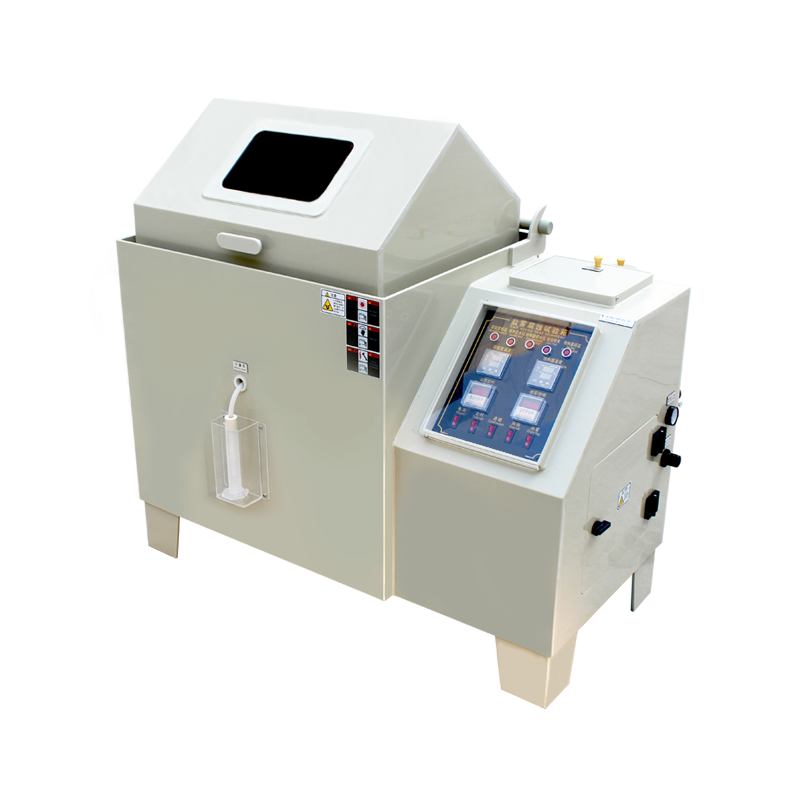
Owning a salt spray test chamber capable of accurately and stably performing these three primary test standards is a direct reflection of a testing laboratory's or manufacturer's technical capability. Our range of salt spray test chambers is meticulously designed and manufactured in strict compliance with international standards. They feature high temperature control precision, excellent fog homogeneity, reliable operation, and allow easy switching between NSS, AASS, CASS, and other test modes. This empowers you to precisely simulate various corrosive environments, providing the most compelling data to support your product's durability and ensuring your product quality stands firm in the competitive market.