In modern industry, salt spray test chambers are essential equipment for evaluating product corrosion resistance. High-salt-concentration testing, as a rigorous test category, can simulate extreme environments, help manufacturers identify potential defects early, and improve product quality. However, high-salt-concentration testing places extremely high demands on equipment performance, operational standards, and environmental control—any oversight can lead to distorted test results or even equipment damage. This article provides authoritative, practical guidance for industry practitioners on precautions for high-salt-concentration testing.
I. Equipment Selection and Calibration: Ensuring Baseline Reliability
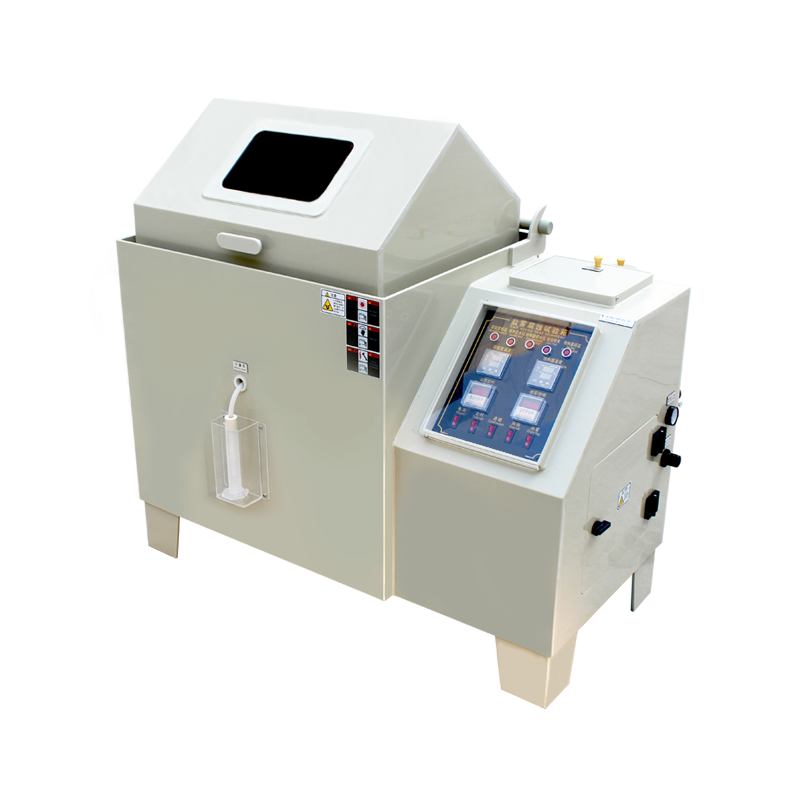
The core of high-salt-concentration testing lies in the stability and precision of the salt spray chamber. First, choose a test chamber specifically designed for high-concentration testing, with an interior structure that is corrosion-resistant (e.g., PVC or fiberglass construction) and a nozzle system that ensures uniform salt spray distribution. Before testing, thoroughly calibrate the equipment, including checking the salt solution concentration, pH value, chamber temperature, and spray pressure. It is recommended to use standard samples for preliminary testing to verify equipment operation and avoid equipment errors affecting final data.
II. Salt Solution Preparation: Precision Determines Success
High-salt-concentration testing typically uses sodium chloride solution at concentrations of 5% or higher. Use distilled or deionized water during preparation to avoid interference from impurities. The salt must be completely dissolved, and the concentration confirmed with precision instruments (such as a salinometer) with an error not exceeding ±0.1%. Meanwhile, the solution pH must be strictly controlled between 6.5 and 7.2—too high or too low will accelerate corrosion or cause atypical reactions. Replace the solution regularly to prevent contaminant accumulation from affecting test consistency.
III. Sample Placement and Monitoring: Details Determine Accuracy
Sample placement directly affects test results. Ensure sufficient spacing between samples to prevent salt spray from being blocked; key surfaces should face the spray direction and be inclined at 15°–30° to simulate real exposure conditions. During testing, monitor chamber temperature, humidity, and spray volume in real time, and record fluctuations. High-concentration environments may accelerate equipment wear—it is recommended to check nozzles for clogging every 24 hours to ensure spray uniformity.
IV. Safety and Maintenance: Ensuring Long-Term Stable Operation
High-salt-concentration testing generates highly corrosive gases. Operators must wear protective equipment and work in a well-ventilated environment. After testing, thoroughly clean the chamber interior to prevent salt crystallization residue from corroding components. Perform regular anti-corrosion maintenance on the equipment, such as replacing saturated barrel filter elements and checking seal aging, to extend equipment life and maintain test precision.
High-salt-concentration salt spray testing is a critical part of product quality verification, and its effectiveness depends on rigorous operating procedures and professional equipment support. By following the precautions above, companies can not only improve the reliability of test data but also optimize product design and enhance market competitiveness. Choosing a reliable salt spray test chamber supplier and establishing standardized operating procedures will inject solid strength into your quality assurance system.