Constant temperature and humidity test chambers are used to test the performance of materials under various environmental conditions, assessing the resistance of various materials to heat, cold, dryness, and humidity. These chambers are suitable for quality testing of products in electronics, electrical appliances, mobile phones, communications, instruments, vehicles, plastic products, metals, food, chemicals, construction materials, medical devices, aerospace, and more. They comply with standards such as GB/T5170.5-2008, GB/T10586-2006, GB/T2423.1-2008 Test A, GB/T2423.2-2008 Test B, GB/T2423.3-2006 Test Ca, and GB/T2423.4-2008 Test D, among others.
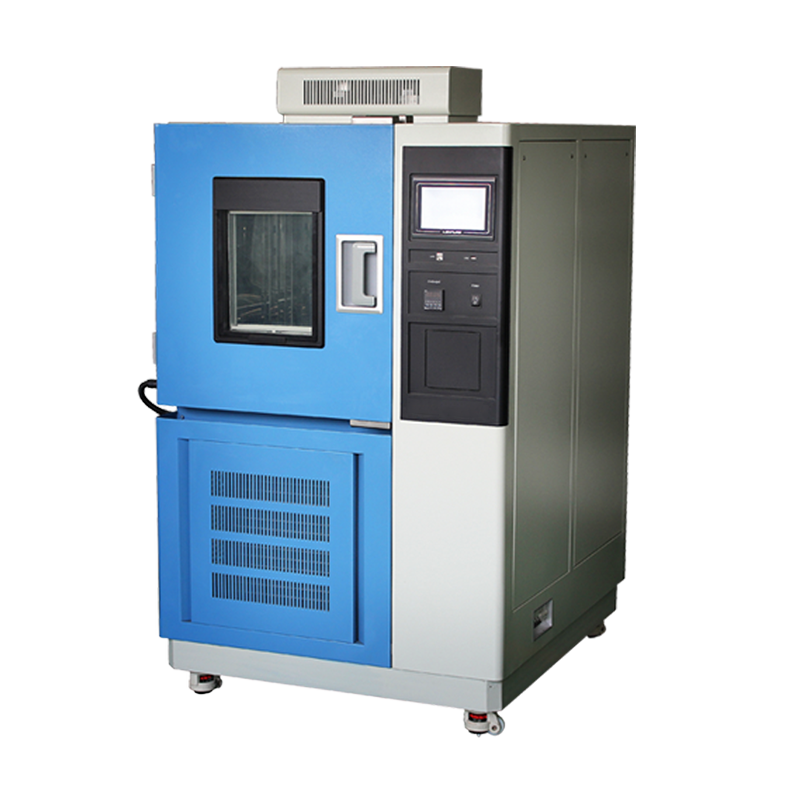
The main temperature control methods for constant temperature and humidity test chambers include:
- High-precision Computer Temperature Control System: Equipped with multiple independent temperature sensors; digital temperature display shows real-time temperature inside the chamber.
- Intelligent Computer Temperature Controller: The refrigeration system and heating system are rationally matched, using forced air circulation to ensure uniform temperature within the chamber.
- Keyboard Lock Function: Prevents arbitrary adjustment of operating parameters.
- Comprehensive Alarm Function: Includes multiple alarm functions for high temperature, low temperature, system faults, power outage alerts, sensor malfunctions, etc.
- New-Type Air Duct Design: Multi-porous air intakes ensure more uniform temperature distribution within the chamber, resulting in a smaller temperature deviation range.