A salt spray chamber cannot simultaneously conduct Neutral Salt Spray (NSS), Acetic Acid Salt Spray (AASS), and Copper-Accelerated Acetic Acid Salt Spray (CASS) tests. The primary reasons are as follows:
1. Differences in Solution Composition and pH Levels
- Neutral Salt Spray (NSS): Uses a 5% NaCl solution with a pH range of 6.5–7.2.
- Acetic Acid Salt Spray (AASS): Adds glacial acetic acid to the 5% NaCl solution, lowering the pH to 3.1–3.3.
- Copper-accelerated Acetic Acid Salt Spray (CASS): Incorporates copper chloride into the AASS solution while maintaining a pH of 3.1–3.3, but requires an elevated temperature of 50°C.
The chemical environments and temperature settings for these three tests are mutually exclusive and cannot coexist in the same chamber at the same time.
2. Equipment Design Limitations
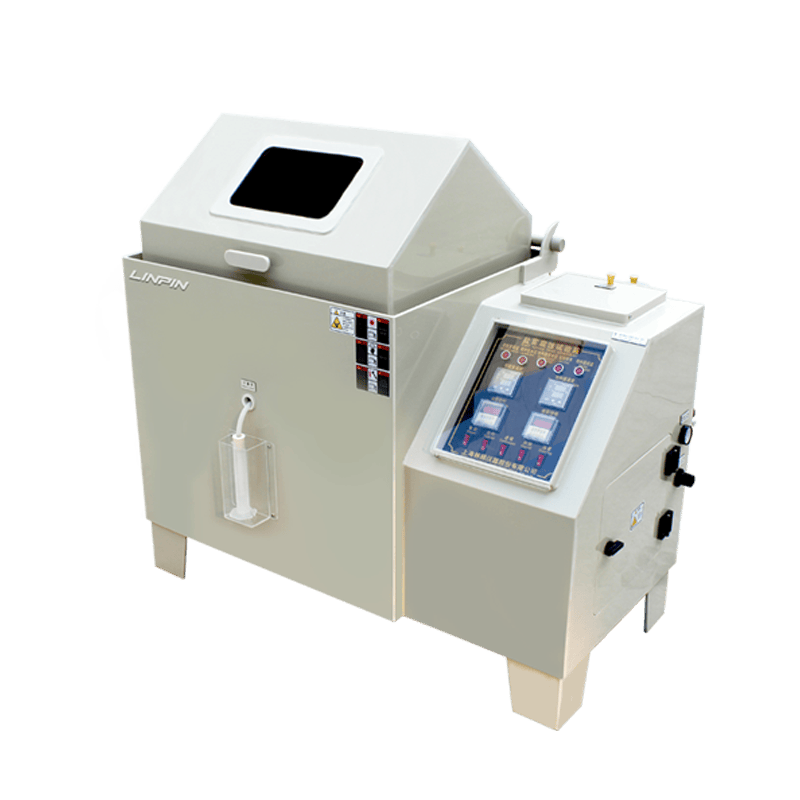
Even “multi-functional” salt spray chambers designed to support various test types can only switch between test conditions sequentially via programmed settings. Between different tests, the chamber must be emptied, cleaned, and refilled with the appropriate solution. Simultaneous testing is not feasible.
3. Standardized Testing Protocols
International and national standards (e.g., GB/T 10125-2021, ASTM B117) define these three tests as independent methods and do not permit mixed or parallel operations.
Practical Recommendations
If multiple salt spray tests are required, consider using a modern salt spray chamber with the following features:
- Programmable switching between NSS, AASS, and CASS modes.
- Automated solution dispensing, pH monitoring, and temperature control.
- Built-in cleaning cycles between tests to minimize manual intervention.
While such equipment cannot run all three tests at the same time, it can automatically execute multiple test cycles sequentially, significantly improving testing efficiency.
Usage Example:
A manufacturer can program the chamber to run NSS for 96 hours, followed by an automated cleaning cycle, then proceed with AASS or CASS testing—all without manual reconfiguration.