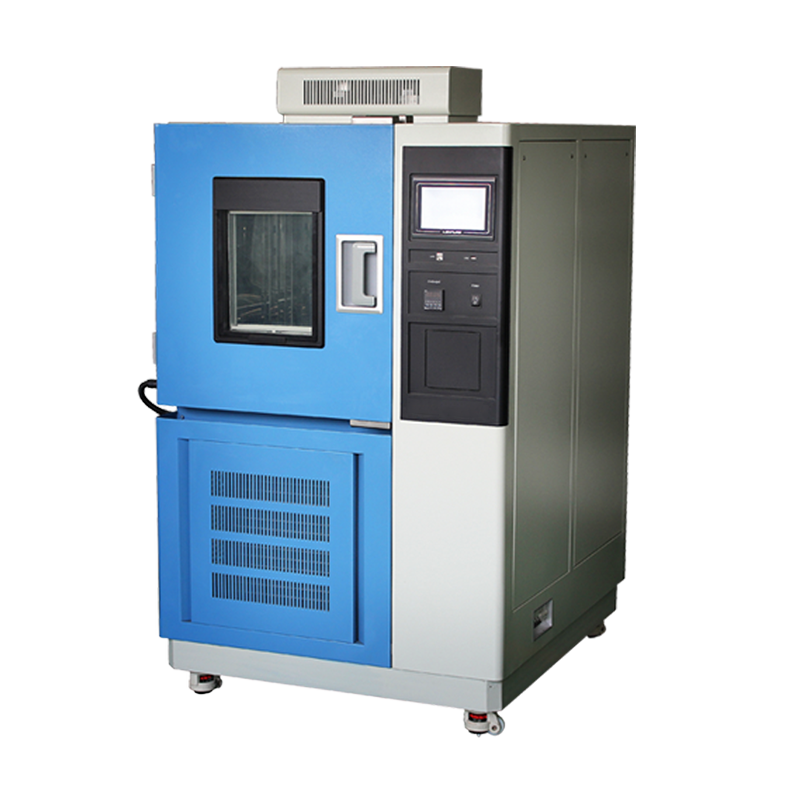
In product development, quality control, and reliability testing, temperature humidity (or thermal shock) chambers are vital for simulating environmental conditions. They accurately replicate a product's ability to withstand extreme temperatures and humidity levels. The accuracy and reliability of test results, however, heavily depend on a seemingly simple yet critical step: proper sample spacing.
I. Spacing Requirements: Based on Science, Not a Fixed Rule
A common question is the request for a specific measurement, like a mandatory number of centimeters between samples. In reality, a single, universal spacing standard does not exist. The core principle is to ensure that air within the chamber can flow uniformly and freely around all surfaces of every sample. This guarantees that all specimens are subjected to the same stable temperature and humidity conditions.

Based on this principle, here are authoritative and practical spacing guidelines:
- Between Samples: A minimum distance of 15 cm (approximately 6 inches) is generally recommended. This provides the necessary pathway for air circulation, preventing samples from shielding each other and creating localized "dead zones" with uneven conditions. For samples that generate significant heat, this distance should be increased further to ensure heat is dissipated effectively.
- Between Samples and Chamber Walls: Maintain a minimum distance of 20 cm (approximately 8 inches) from the inner walls. The chamber walls experience the most rapid temperature changes. Placing samples too close can cause them to experience temperatures that deviate from the setpoint, compromising data accuracy. This also prevents accidental contact with the walls.
- Between Samples and Air Vents (Inlet/Outlet): This is the most critical area. Samples must never obstruct the air supply or return vents. Ensure airflow can envelop the samples. A distance of 30 cm (approximately 12 inches) or more from the vents is often required—always consult your specific chamber's technical manual for precise guidance.
II. Consequences of Incorrect Spacing: More Than Just Data Errors
Improper sample spacing can directly lead to test failure, with significant consequences:
- Non-Uniform Conditions: Some samples may be exposed to harsher conditions while others remain in a milder environment, rendering the validation results non-representative and non-comparable.
- Inaccurate Data: Fails to accurately assess the true performance limits of a product. This could lead to defective products reaching the market or the erroneous rejection of a well-designed product.
- Extended Test Cycles: The chamber may require longer stabilization times to reach equilibrium, reducing testing efficiency.
- Increased Equipment Strain: Improper loading places additional stress on the compressor, heaters, and humidifiers, potentially shortening the equipment's lifespan.
III. Our Expertise: Providing Tailored Solutions
As a leader in environmental testing equipment, we understand the importance of rigorous protocols. We provide not only high-performance chambers but also comprehensive technical support:
- Detailed Operational Training: Our engineers provide expert guidance on proper loading techniques to ensure your team masters this critical aspect.
- Customized Layout Advice: We can assist in planning the optimal layout based on your specific samples' shape, size, and heat load.
- Compliance with International Standards: Our design principles and guidance strictly adhere to relevant international and national testing standards (such as ISO, GB/T, IEC), ensuring your processes are authoritative and credible.
Correct sample placement is the cornerstone of achieving valid and reliable results from environmental testing. It reflects a commitment to scientific rigor and quality assurance. By partnering with us, you gain access to a complete quality validation system backed by robust technology and extensive experience, helping your products excel under stringent environmental challenges and earn market trust.