In product design and manufacturing, water resistance is often one of the key factors determining reliability, safety, and service life. Whether it's outdoor electronic devices, automotive components, home appliances, or smart wearable products, all may face the challenges of rain, splashing, or humid environments. IP (Ingress Protection) water resistance testing conducted with rain test chambers is precisely the core method for systematically verifying a product enclosure's water resistance by simulating various precipitation conditions. So, what specific performance aspects can this testing verify for a product? And how is its value reflected in real-world usage scenarios?
I. Verifying the Integrity of Enclosure Sealing
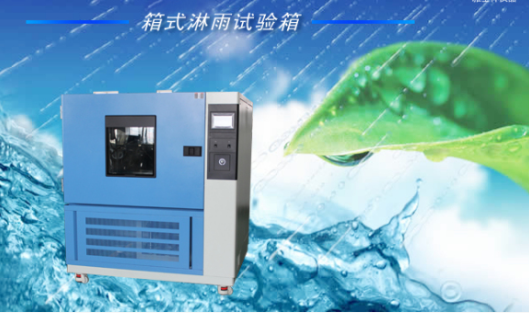
One of the core purposes of rain testing is to evaluate a product enclosure's ability to prevent liquid ingress, which directly relates to the product's IP protection rating (such as IPX4 splash resistance, IPX5 water jet resistance, IPX6 strong water jet resistance, IPX7 short-term immersion resistance, etc.). By precisely controlling water pressure, water volume, and spray angle, rain test chambers can simulate scenarios ranging from light drizzle to storms. After testing, by checking whether there are water marks or condensation inside the product, one can objectively determine whether its sealing structures (such as gaskets, interfaces, and assembly gaps) are tight. If the interior remains dry, it indicates that the product has reliable leakage prevention capability under the corresponding level of environmental conditions.
II. Assessing Moisture Resistance of Internal Components
Even if the enclosure has a certain degree of sealing, internal electronic components or mechanical structures may experience performance degradation due to prolonged exposure to humid environments. Rain testing not only focuses on "whether water enters" but also compares the product's electrical performance (such as insulation resistance and power-on stability) and functional operating status (such as button sensitivity, screen display, and sensor accuracy) before and after testing to determine its tolerance under high humidity or water exposure conditions. For example, an outdoor speaker that passes IPX5 testing should maintain stable sound quality without short-circuit risk after being sprayed.
III. Testing the Durability of Materials and Coatings
Water resistance depends not only on structural design but is also closely related to material selection. During rain testing, the impact and penetration of water flow, as well as the subsequent drying process, may expose material defects—such as deformation of plastic enclosures, peeling of coatings, or corrosion tendencies at metal joints. Through cyclic or high-intensity testing, one can verify whether materials possess water erosion resistance, oxidation resistance, or weather resistance characteristics, thereby avoiding appearance damage or performance degradation caused by long-term use.
IV. Providing Data Support for Long-Term Reliability and Safety
For high-risk fields such as industrial equipment or medical devices, water resistance is directly linked to user safety. Data from rain testing can serve as objective evidence that a product complies with industry standards (such as IEC 60529), helping companies avoid short circuits, failures, or even safety accidents caused by liquid ingress. At the same time, through the weak points identified during testing, R&D personnel can make targeted design optimizations to improve the product's long-term reliability in real environments.
A rain test chamber is not simply a "watering test" but a scientific verification system. Through controllable and repeatable simulated environments, it places products in waterproof challenges close to real conditions, thereby providing quantitative basis for sealing design, material selection, and process optimization. Whether for enhancing brand reputation or meeting market access requirements, systematic water resistance testing has become an indispensable verification step for high-quality products. Only products that can withstand the "wind and rain" of the laboratory can truly earn market recognition.