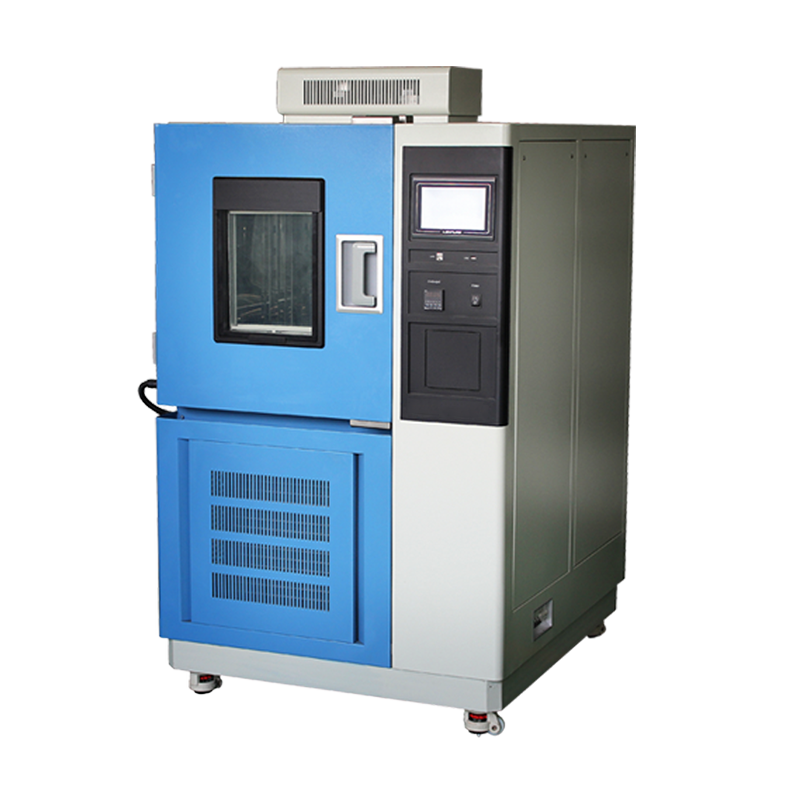
In the design and manufacturing of outdoor equipment, ensuring reliable performance under extreme heat, severe cold, and seasonal transitions is a critical challenge for every manufacturer. As a cornerstone of environmental reliability testing, high-low temperature test chambers provide scientific, repeatable validation by precisely replicating the world’s harshest climate conditions—from arctic cold to desert heat.
Case Study: Weathering Tests on an Outdoor Telecom Base Station Unit
Consider the example of a leading telecommunications equipment manufacturer testing its outdoor base station units. These units are installed in uncontrolled outdoor environments and must endure everything from –40°C (–40°F) winter lows to +55°C (131°F) summer peaks throughout a design life of 15 years. To accelerate validation, the R&D team employed a high-performance temperature test chamber with rapid transition capabilities.
Test profile:
Over a programmed cycle, the chamber brought the unit from a 25°C ambient baseline down to –40°C within hours and held that temperature to assess material embrittlement and cold-start performance. The chamber then gradually ramped up to 55°C to simulate prolonged midday solar exposure, evaluating heat dissipation effectiveness and structural aging resistance. This cycle was repeated hundreds of times, effectively compressing years of seasonal thermal stress into weeks of laboratory testing.

Findings & actions:
After the accelerated test sequence, inspection revealed two latent issues:
-
Certain internal connectors showed slight loosening due to mismatched coefficients of thermal expansion between materials.
-
Specific capacitors on the mainboard exhibited excessive performance degradation at low temperatures.
These failures—which would have been nearly impossible to detect in routine benchtop testing—were identified early. The manufacturer responded by redesigning the connector locking mechanisms and upgrading capacitor specifications. As a result, field failure rates were significantly reduced, and the company avoided large-scale service costs driven by seasonal environmental stresses.
Core Value: From Simulation to Prediction
This case highlights several key advantages of high-low temperature testing:
-
Realistic environmental replication
Modern chambers offer precise control over a wide temperature range (e.g., –70°C to +150°C) and support rapid ramp rates, enabling simulation of everything from polar winters to tropical summers—including sudden weather shifts. -
Accelerated failure detection
By intensifying temperature cycling, chambers compress years of thermal fatigue into weeks, revealing early signs of material degradation, solder joint fatigue, component drift, and mechanical wear that would otherwise surface only after deployment. -
Data-driven decision making
The testing process generates comprehensive temperature profiles and performance logs, enabling engineers to trace every deviation to a specific stress condition. This transforms reliability improvements from guesswork into evidence-based engineering. -
Reduced market risk and enhanced brand reputation
Rigorous pre-deployment testing minimizes field failures linked to climate extremes, lowering warranty claims, service visits, and reputational damage—giving manufacturers a competitive edge in quality-conscious markets.
Choosing the Right Testing Partner
A high-quality temperature test chamber must deliver more than just thermal range. Uniformity, control precision, long-term stability, safety features, and compliance with international standards (e.g., GB/T, IEC, MIL, etc.) are equally critical. Beyond hardware, a trusted supplier brings domain expertise—helping customers design tailored test protocols that uncover hidden risks early and align with product-specific operating conditions.
Seasonal variation remains one of the toughest real-world challenges for outdoor equipment. High-low temperature test chambers bridge the gap between the laboratory and the field, turning unpredictable natural forces into structured, repeatable, and measurable data. By doing so, they empower manufacturers to build products that genuinely withstand the test of time and climate—laying a solid foundation for safer, more reliable outdoor infrastructure.