In product development, quality control, and reliability testing, temperature humidity (or thermal shock) chambers are vital for simulating environmental conditions.
UV aging test chambers have become essential testing equipment widely used in security product evaluation, and their application has reached a high level of maturity.
The constant temperature and humidity chamber serves as an indispensable guardian of quality in meeting this stringent demand, providing scientific and authoritative environmental simulation validation for the R&D and quality control of medical consumables.
Low-pressure test chambers, as advanced testing equipment, are increasingly becoming a key tool for companies aiming to improve the accuracy of product lifespan predictions.
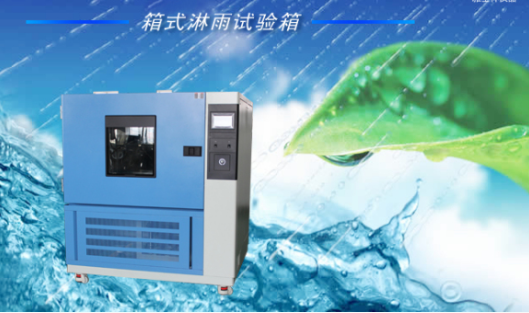
As a specialized environmental reliability testing equipment, the rain test chamber plays a vital role by accurately replicating a variety of natural rainfall conditions, providing scientific and authoritative validation for product waterproof performance.
A water resistance test chamber is a specialized device used to test the performance and durability of products under humid conditions. It simulates various humid environments, including rain, moisture, and immersion.
Temperature shock test chambers are testing devices used in industries involving metals, plastics, rubber, electronics, and other materials. Over the years, many users have encountered various faults during usage, feeling frustrated about how to resolve them. Today, we summarize the following common faults of temperature shock test chambers and their solutions.
High and low temperature test chambers are essential testing equipment in fields such as aviation, automotive, scientific research, chemistry, and construction materials.
The sand and dust test chamber is mainly used for testing the physical and other related properties of products such as electronic and electrical products, lamps, electrical cabinets, electrical components, automobiles, motorcycles, and their parts in a simulated dusty environment.
Constant temperature and humidity test chambers are used to test the performance of materials under various environmental conditions, assessing the resistance of various materials to heat, cold, dryness, and humidity.
A HAST test chamber is a laboratory tool used to test the reliability and stability of electronic products, semiconductor devices, and other industrial products. It employs high-temperature and high-humidity environmental conditions to accelerate performance degradation and potential failures, thereby helping manufacturers identify issues and improve product design and manufacturing processes before products hit the market.
We value your privacy We use cookies to enhance your browsing experience, serve personalized ads or content, and analyze our traffic. By clicking "Accept Essential Cookies", you consent to our use of cookies.

 High And Low Temperature Test Chamber Salt Spray Test Chamber Aging Test Series Walk In Testchamber Temperature Test Chamber Thermal Shock Test Chambers Programmable Temperature Humidity Test Chamber High and Low Temperature Low Pressure Test Chamber Salt Spray Corrosion Test Chamber Thermal Cycling Chamber Temperature Humidity Test Chamber High and Low Temperature Humidity Test Chamber Low Temperature Test Chamber High Temperature Test Chamber Thermal Cycling Chamber Rustproof Grease Humidity Test Chamber UV Aging Test Chamber Ozone Aging Test chamber Ventilation Aging Test Chamber Rain Test Chamber Sand and Dust Test Chamber Sulfur Dioxide Test Chamber Mold Test Chamber Ultra-Low Temperature Test Chamber Salt Spray Test Machine Condensation Test Chamber HAST Test Chamber Thermal Vacuum Test Chamber Battery Explosion-proof Test Chamber High and Low Temperature Battery Test Chamber PV Module UV Test Chamber Sunlight Simulation Test Chamber Photovoltaic Wet Freezing Test Chamber Photovoltaic Dustproof Test Chamber