In product development, quality control, and reliability testing, temperature humidity (or thermal shock) chambers are vital for simulating environmental conditions.
UV aging test chambers have become essential testing equipment widely used in security product evaluation, and their application has reached a high level of maturity.
The constant temperature and humidity chamber serves as an indispensable guardian of quality in meeting this stringent demand, providing scientific and authoritative environmental simulation validation for the R&D and quality control of medical consumables.
Low-pressure test chambers, as advanced testing equipment, are increasingly becoming a key tool for companies aiming to improve the accuracy of product lifespan predictions.
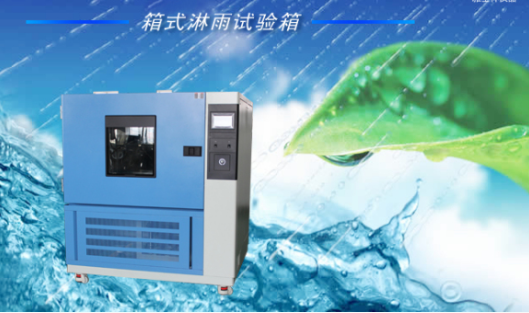
As a specialized environmental reliability testing equipment, the rain test chamber plays a vital role by accurately replicating a variety of natural rainfall conditions, providing scientific and authoritative validation for product waterproof performance.
Users are aware that water is required for humidity testing in constant temperature and humidity test chambers. Generally, it is recommended to use a dedicated water tank or an external water tower for water supply, as poor water quality may adversely affect the equipment.
It is normal for equipment to malfunction, which may be caused by improper operation or issues with the equipment itself. Based on years of after-sales service experience in the environmental testing industry, we have summarized the following common fault causes and solutions for waterproof test equipment.
Aging test chambers typically consist of a circulation system, heating system, and over-temperature exhaust system, all installed at the top of the aging chamber to avoid occupying additional space.
As winter approaches, it's essential to keep warm by wearing thick cotton-padded clothes. Similarly, we should not neglect the winter protection of high and low temperature cycling test chambers.
The xenon lamp aging test chamber is used to simulate the destructive light waves existing in different environments through xenon arc lamps that can simulate the full-sunlight spectrum.
In my understanding, the Liquid Nitrogen Cryogenic Test Chamber uses liquid nitrogen, which is compressed from gaseous nitrogen, to achieve refrigeration.
The rain test chamber is mainly used to inspect and evaluate the exterior lighting and other devices' casings, as well as the sealing of parts in the automotive industry.
The temperature shock test chamber, also known as the cold and hot shock test chamber, is mainly used to test the degree to which materials or composite materials can withstand the instantaneous exposure to extremely high and extremely low temperatures in a continuous environment.
We value your privacy We use cookies to enhance your browsing experience, serve personalized ads or content, and analyze our traffic. By clicking "Accept Essential Cookies", you consent to our use of cookies.

 High And Low Temperature Test Chamber Salt Spray Test Chamber Aging Test Series Walk In Testchamber Temperature Test Chamber Thermal Shock Test Chambers Programmable Temperature Humidity Test Chamber High and Low Temperature Low Pressure Test Chamber Salt Spray Corrosion Test Chamber Thermal Cycling Chamber Temperature Humidity Test Chamber High and Low Temperature Humidity Test Chamber Low Temperature Test Chamber High Temperature Test Chamber Thermal Cycling Chamber Rustproof Grease Humidity Test Chamber UV Aging Test Chamber Ozone Aging Test chamber Ventilation Aging Test Chamber Rain Test Chamber Sand and Dust Test Chamber Sulfur Dioxide Test Chamber Mold Test Chamber Ultra-Low Temperature Test Chamber Salt Spray Test Machine Condensation Test Chamber HAST Test Chamber Thermal Vacuum Test Chamber Battery Explosion-proof Test Chamber High and Low Temperature Battery Test Chamber PV Module UV Test Chamber Sunlight Simulation Test Chamber Photovoltaic Wet Freezing Test Chamber Photovoltaic Dustproof Test Chamber