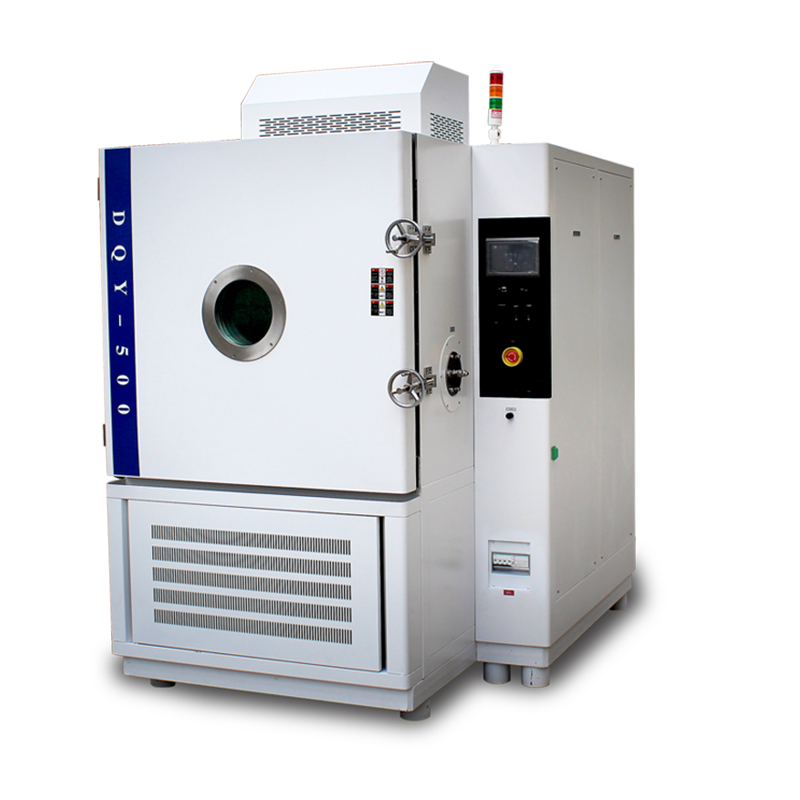
In the stringent quality systems governing military products, every piece of equipment must endure extreme environmental stress testing to prove its absolute reliability and stability under any anticipated battlefield condition. Low-pressure (altitude) simulation testing is a critical step in verifying a product's high-altitude adaptability, sealing integrity, and operational stability. As the core instrument in this process, the low-pressure test chamber’s performance and compliance directly impact the final quality of military hardware. So, what authoritative standards must these chambers meet in the defense sector, and how do they demonstrate their essential value and capability?
I. Adhering to Authoritative Standards – The Foundation of Compliance
Given the unique nature of defense applications, testing equipment must conform to rigorous national and internationally recognized standards. In military product testing, low-pressure chambers are primarily governed by the following standard frameworks:
National Military Standards (GJB) – These are the fundamental baseline for quality control in China’s defense industry. For example, GJB 150.2A-2009, part of the GJB 150 series on Laboratory Environmental Test Methods for Military Materiel, specifically addresses "Low Pressure (Altitude) Tests." It defines key parameters such as the pressure range (corresponding to altitude levels), temperature variations, test duration, and pressurization/depressurization rates. Compliance with GJB standards is a non-negotiable prerequisite for chambers used in military applications.
National Standards (GB/T) – Some general Chinese national standards also relate to environmental testing and provide basic technical specifications for chamber design and manufacturing, ensuring fundamental performance and reliability.
Sector-Specific Standards – Individual branches of the military (e.g., aviation, aerospace, ordnance, naval) may issue more detailed test protocols tailored to their specific product types, imposing stricter requirements on chamber accuracy, control capabilities, and safety features.
International Standards (e.g., MIL-STD, RTCA/DO-160) – For programs involving exports or international collaboration, chambers may also need to comply with global standards such as the U.S. MIL-STD-810 (specifically its low-pressure test methods) or RTCA/DO-160 for airborne equipment. This ensures test results are recognized and accepted worldwide.

II. Beyond Compliance – Performance Attributes That Matter
Meeting the written standard is only the starting point. True capability lies in deeper engineering excellence and superior performance:
-
Precise Pressure Control – Military testing demands accurate, stable simulation of continuous pressure changes from ground level to high altitudes (tens of thousands of meters). Pressure control accuracy and uniformity are critical differentiators between high- and low-quality chambers.
-
Reliable Sealing Integrity – Over long-duration negative-pressure operation, the chamber must maintain leak-proof performance to ensure test environment fidelity. This is especially vital when evaluating seals and components under low-pressure conditions.
-
Multi-Stress Environmental Integration – Modern military tests often require combined environmental stresses. Advanced chambers can integrate temperature, humidity, and even vibration capabilities, enabling coupled "altitude–temperature–humidity–vibration" testing that more realistically replicates complex battlefield environments.
-
Robust Safety and Stability – The system must incorporate comprehensive protection features (e.g., overpressure protection, fault alarms, emergency venting) to ensure personnel and equipment safety during extended, high-intensity operation, safeguarding valuable test samples and data integrity.
-
Intelligent Control and Data Management – Sophisticated control systems can program complex pressure-time profiles, automate test sequences, and provide real-time data logging and detailed reporting. This delivers actionable insights for quality analysis and product improvement.
III. Strategic Value – Strengthening Defense Readiness
For defense organizations, a high-quality, standards-compliant low-pressure chamber offers far more than just testing capability:
-
Enhanced Environmental Adaptability – By exposing potential failure modes (e.g., component breakdown, lubricant degradation, seal leaks, performance drift) under low-pressure conditions, the chamber provides critical data for design refinement, significantly improving high-altitude and plateau operational performance.
-
Reduced Development Cycles and Risks – Simulating extreme environments in the laboratory reduces the need for extensive field testing, accelerating product qualification and delivery while drastically lowering costs and safety risks associated with live-site trials.
-
Strict Quality Assurance – As a key gatekeeping step in production, the chamber ensures that every delivered military item meets the demanding environmental requirements of real-world missions, directly supporting national defense readiness.
-
Enabling Technological Innovation – The chamber serves as a reliable validation platform for new materials, new processes, and new components, driving continuous advancement in military technology.
In the defense sector, where absolute reliability is non-negotiable, the low-pressure test chamber is far more than a piece of laboratory equipment. It is a critical gatekeeper and a trusted evaluator within the military quality assurance framework. Choosing a chamber that strictly complies with GJB and other hard-hitting standards—while offering advanced technology, stable performance, and intelligent operation—is not merely a regulatory necessity. It is a strategic investment that strengthens R&D capabilities, safeguards product quality, and fulfills the mission of supporting national defense.