In modern industry, a product's corrosion resistance directly impacts its lifespan and performance. As a critical corrosion testing method, salt spray testing is widely used to evaluate the reliability of metal materials, coatings, and overall structures. Today, let’s delve into the differences between neutral salt spray testing, acetic acid salt spray testing, and copper-accelerated acetic acid salt spray testing to help you make informed decisions when selecting the appropriate method.
Neutral Salt Spray Test: The Foundation of Corrosion Resistance Evaluation
The neutral salt spray test is one of the most commonly used methods, employing a neutral sodium chloride solution. This test simulates relatively mild corrosion conditions, making it suitable for assessing the corrosion resistance of most metal materials. Its advantage lies in its realistic testing conditions, effectively reflecting how materials perform in real-world environments. For general products and engineering applications that do not require high corrosion resistance, the neutral salt spray test is a reliable choice.
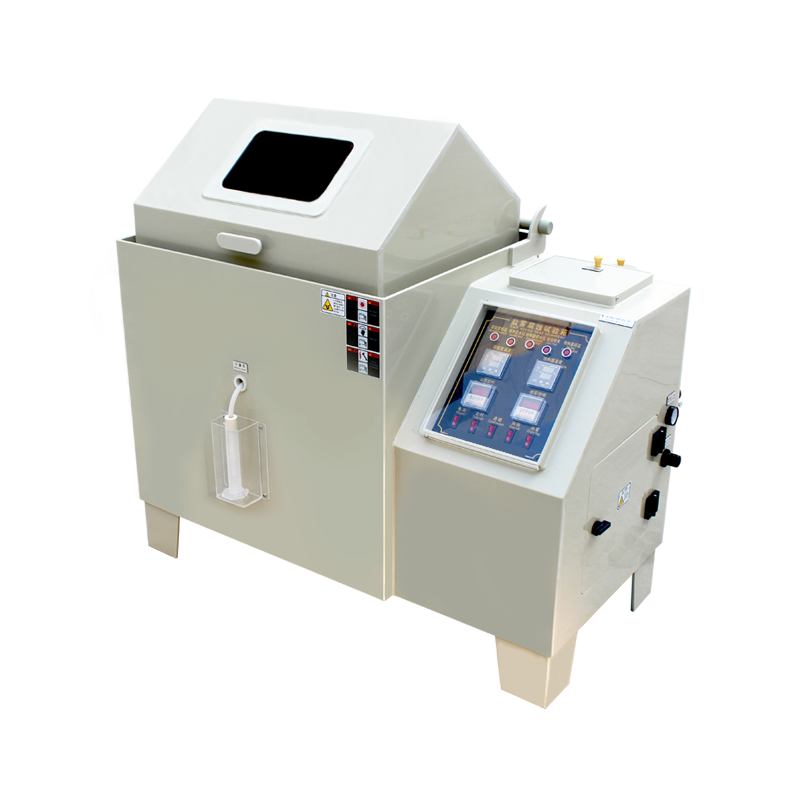
Acetic Acid Salt Spray Test: A Harsher Corrosion Challenge
Unlike the neutral salt spray test, the acetic acid salt spray test incorporates acetic acid into the salt solution, increasing the acidity of the test environment. This accelerates corrosion, simulating more severe conditions. It is typically used for products that must maintain performance in harsh environments, such as automotive components and construction materials. For high-performance anti-corrosion coatings, the acetic acid salt spray test is an essential validation method.
Copper-Accelerated Acetic Acid Salt Spray Test: The Most Extreme Challenge
The copper-accelerated acetic acid salt spray test builds upon the acetic acid salt spray test by introducing copper ions. This method replicates extreme corrosion conditions, testing materials under high copper ion concentrations. The presence of copper significantly speeds up the corrosion process, making this test ideal for aerospace, marine environments, and other demanding industrial applications. Although this test is more time-consuming and costly, it provides the most rigorous assessment of product performance, making it the preferred choice for high-end products.
By understanding the characteristics and applications of these three salt spray tests, you can more scientifically select the right method for your product. Each test serves a unique purpose and is tailored to specific needs, ensuring quality control and long-term reliability for your business.